
The biggest crypto hack in history started with a fake job interview. Now one of Bitcoin’s oldest infrastructure firms is betting that the answer to AI-era attacks is simpler, hardware-first Bitcoin custody.
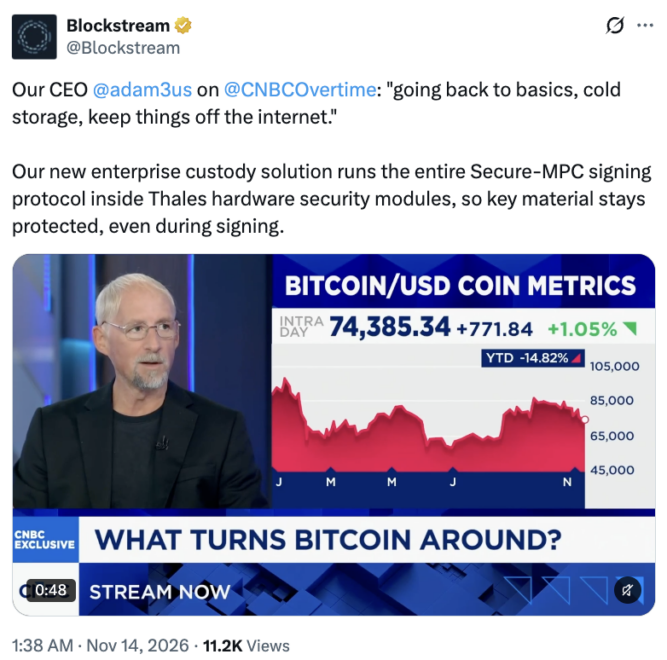
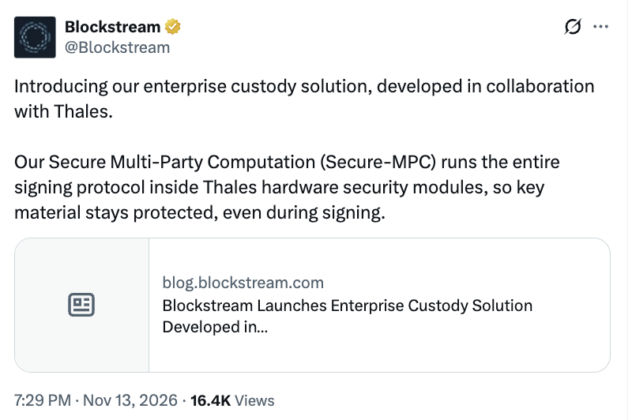
Blockstream, the company led by co-founder and CEO Adam Back, has launched an enterprise custody solution developed with French technology and cybersecurity group Thales, according to a company announcement on Nov. 13.
The pitch is straightforward: keep the most sensitive part of moving bitcoin, signing transactions, locked inside dedicated security hardware where hackers cannot reach it.
And the timing could not be more relevant.
How Blockstream’s New Bitcoin Custody System Works
The solution is delivered through Blockstream Enterprise, the company’s institutional platform, and builds on a two-year relationship between the two firms.
It combines Thales’ hardware security modules (HSMs) with Blockstream’s Secure Multi-Party Computation, or Secure-MPC. MPC spreads signing authority across several parties, so no single person or device controls the private key.
The key difference is where that process happens. Blockstream says its system executes the signing protocol entirely within the HSM’s secure environment, while conventional MPC solutions may expose parts of the process to general-purpose computers that are easier to attack.
The system also uses FROST, a threshold signing protocol that lets multiple authorized parties jointly produce a signature without ever reconstructing the full private key.
“By moving MPC execution inside the HSM, this architecture addresses critical security risks,” said Jeff Boortz, Blockstream’s chief product officer.
The Binance Hack Showed Where Custody Breaks
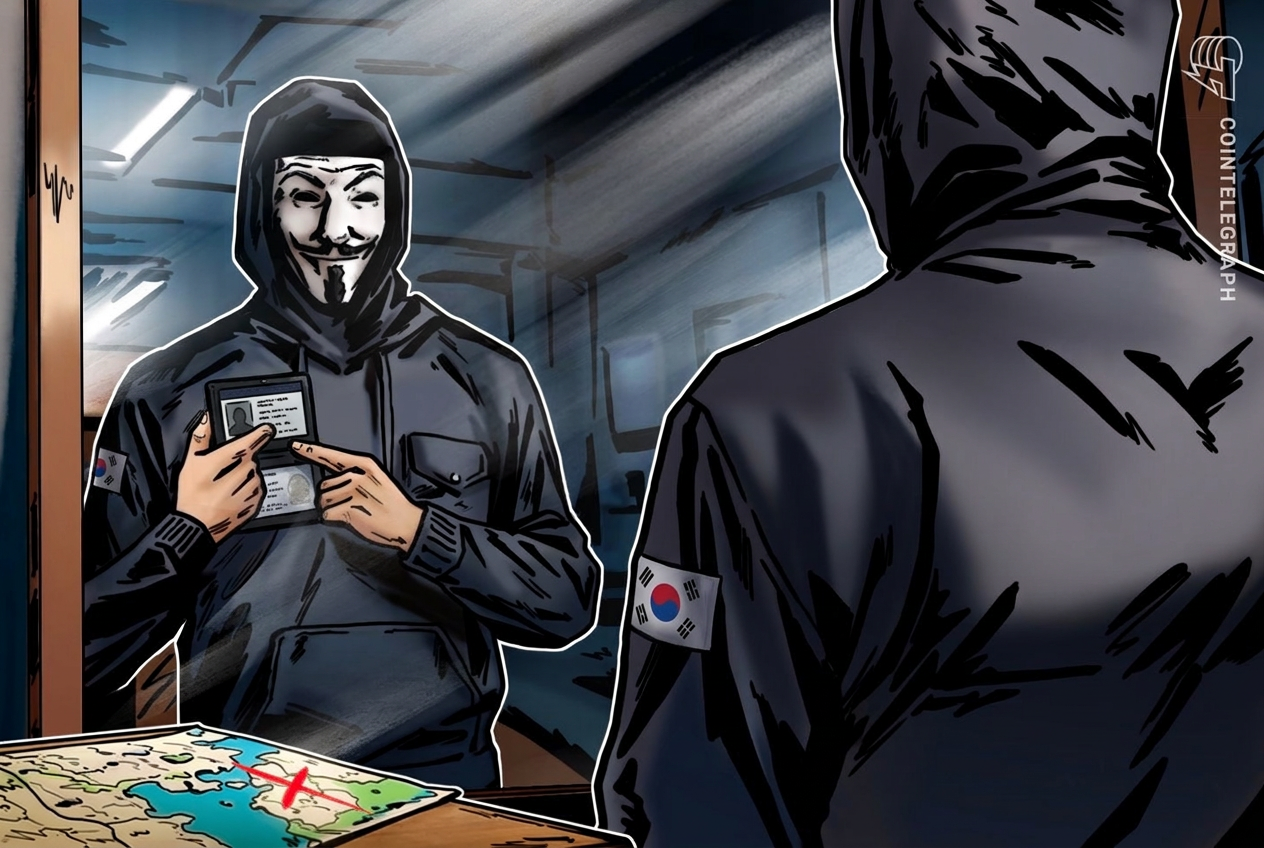
The launch comes just two weeks after hackers stole about $6.3 billion from Binance, an attack the FBI attributed to North Korea.
The weak point was not the blockchain. It was people and connected computers. Binance said attackers staged fake job interviews and planted malware in a coding assignment downloaded onto an engineer’s work computer.
AI played a role too. The campaign included a June incident in which a wallet engineer downloaded a tampered installer while looking for an AI coding tool. By Oct. 20, the attackers had used a compromised computer and an internal AI tool to break into the machines of two more employees working on Binance’s wallet infrastructure, according to BleepingComputer, obtaining credentials and a container deployment token.
That chain of events is exactly what hardware-based Bitcoin custody is designed to stop. If signing keys never leave a sealed device, a hacked laptop is far less useful.
Back To Basics In The Age Of AI
Adam Back, the cryptographer whose Hashcash system helped lay the groundwork for Bitcoin’s proof-of-work, has long championed offline key storage. Blockstream already builds hardware wallets and HSMs for cold storage, alongside enterprise wallets for custodians.
The broader industry is moving in the same direction. Thales has also expanded its work with Fireblocks to keep signing operations inside customer-owned HSMs at banks and regulated institutions.
The idea is simple. As AI makes it easier for attackers to find small mistakes in complex software, the safest approach is to cut down the number of places where keys can be exposed.
Blockstream knows the stakes firsthand. In September, its Liquid Network sidechain was drained of nearly 4,000 BTC through a software bug, with the attackers returning 3,400 BTC after the flaw was patched.
Why This Is Good News For Bitcoin Adoption
For institutions, security is the gatekeeper. Banks and asset managers cannot hold bitcoin at scale without custody that meets the same standards as the rest of their operations.
“Financial institutions require secure, reliable infrastructure as they integrate bitcoin into their existing operations,” said Michael Minkevich, Blockstream’s president and chief operating officer.
That demand has been building since spot Bitcoin ETFs became top performers after their 2024 launch, pulling Wall Street deeper into the asset. Stronger custody options make it easier for the next wave of institutions to follow.
The market itself is under pressure, with Bitcoin trading below $70,000 after a sharp sell-off. But behind the price, the infrastructure that will hold the next trillion dollars of bitcoin keeps getting stronger. For more updates, follow the latest Bitcoin news.
What do you think?
Will the Binance hack push more institutions toward hardware-based Bitcoin custody, or is self-custody in cold storage still the only real answer?

You can get bonuses upto $100 FREE BONUS when you:
💰 Install these recommended apps:
💲 SocialGood - 100% Crypto Back on Everyday Shopping
💲 xPortal - The DeFi For The Next Billion
💲 CryptoTab Browser - Lightweight, fast, and ready to mine!
💰 Register on these recommended exchanges:
🟡 Binance🟡 Bitfinex🟡 Bitmart🟡 Bittrex🟡 Bitget
🟡 CoinEx🟡 Crypto.com🟡 Gate.io🟡 Huobi🟡 Kucoin.












Comments