
Key Takeaways:
- USDT retains the lowest rating, 5, on S&P Global Ratings’ “Weak” side of the stability scale for stablecoins.
- S&P reports that higher-risk reserve assets account for 28% of the USDT in circulation.
- Tether stoutly contested the analysis, citing the nearly $8 billion in spare parts and cash.
Tether has responded to S&P Global Ratings, which had assigned its stablecoin USDT the lowest rating for its stability evaluation. S&P said the growing share of Bitcoin, gold and other higher-risk assets in Tether’s reserves remains a key concern despite USDT’s strong price-stability record.
S&P Keeps USDT at Its Lowest Stability Score
In November 2025, S&P rated USDT’s ability to sustain the dollar peg at 5, or below-average, as unchanged from the previous level.
The agency reported that assets it deems less secure, such as Bitcoin, gold, public equities, secured loans and corporate bonds, accounted for 28% of all its assets at the end of September, compared with 24% a year ago.

S&P reiterated its warning that a significant drop in those assets might compromise Tether’s cover cushion and make USDT undercollateralized.
Read More: Tether Bets $15M on Nomad to Push USDT and XAUT Deeper Into Brazil’s Crypto Market

Tether Points to a Nearly $8 Billion Reserve Buffer
The company’s own Sept. The results of the 30 financial figures for assets and liabilities indicated that there was $191.45 billion in assets and $183.50 billion in liabilities, which amounted to about $7.95 billion. These numbers were part of a report on Tether’s third quarter reserves, signed by BDO.
The short-term instruments, such as U.S. government securities and U.S. Treasury bills, are also extremely important to Tether’s reserve structure, as it reports $132.4 billion in direct and indirect U.S. Treasury bill exposure at the end of the quarter.

S&P Flags Regulation and Reserve Transparency
S&P also expressed concerns about the regulatory protections in which capacity Tether reserves are stored.
El Salvador’s stablecoin law has a minimum of 70% short-term liquidity requirement for assets held in reserve. Despite the rules, Bitcoin assets provided a lot of latitude, as do gold and loans; also, the rules do not include the same level of Mandatory segregation requirements as in some U.S. and European rules.
The agency also identified disclosure shortcomings, such as not having reserve custodians and counterparties identified publicly or providing reserve attestations every quarter instead of every month.
Tether’s Audit Adds Another Layer to the Dispute
Tether has acted to improve its financial reporting. In August, KPMG U.S. provided an unqualified opinion of Tether International’s 2025 financial statements. This is its first complete independent financial audit, Tether said, which kpmg reviewed assets, transactions, systems, valuations and counterparties.
S&P noted that the audited financial statements along with the full audit report were not available to them for the public review.
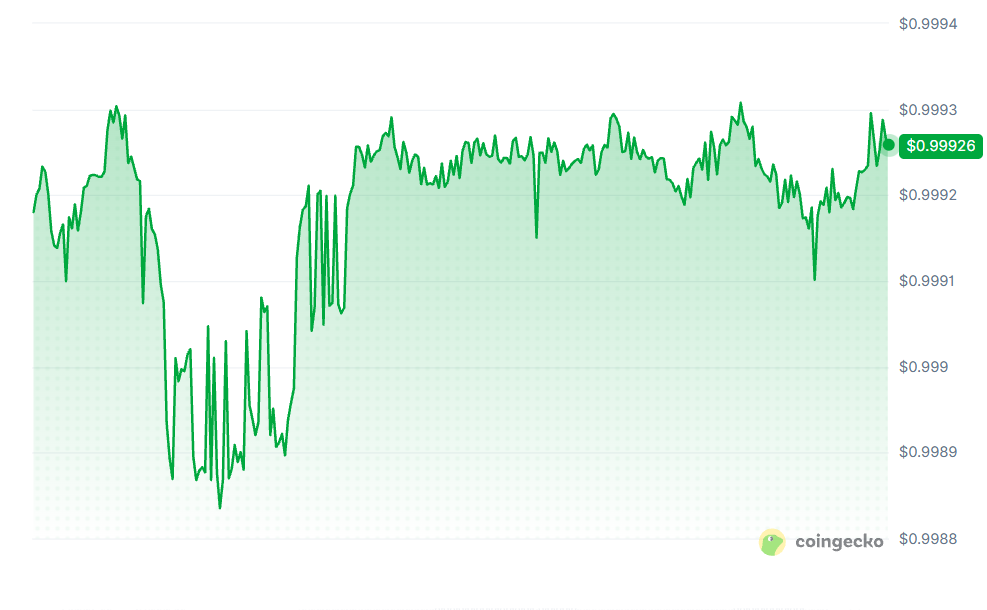
Notwithstanding the risks cited, S&P credited USDT with a good record of price stability, especially in the past year. The agency didn’t make further cuts because 5 already is the lowest score given in its scoring system.
Read More: Tether Opens Global AI and Product Jobs to Advance Its Decentralized Tech Vision
The post Tether Fires Back After S&P Keeps USDT at Weakest Stability Score Over Reserve Risks appeared first on CryptoNinjas.

You can get bonuses upto $100 FREE BONUS when you:
💰 Install these recommended apps:
💲 SocialGood - 100% Crypto Back on Everyday Shopping
💲 xPortal - The DeFi For The Next Billion
💲 CryptoTab Browser - Lightweight, fast, and ready to mine!
💰 Register on these recommended exchanges:
🟡 Binance🟡 Bitfinex🟡 Bitmart🟡 Bittrex🟡 Bitget
🟡 CoinEx🟡 Crypto.com🟡 Gate.io🟡 Huobi🟡 Kucoin.














Comments